Tronlink wallet is a TRON-native wallet for staking TRX and delegating Energy
Self-custody TRON wallet for managing assets, with TRX staking and Energy delegation built into its browser extension and mobile app.
Tronlink wallet is a self-custody wallet built around TRON accounts, TRX staking, resource management, token transfers, voting, and DApp access. It runs as a browser extension and mobile app, stores private keys locally, and gives users direct control over TRX, TRC-10 tokens, TRC-20 tokens such as USDT on TRON, and TRC-721 NFTs. Its strongest fit is daily TRON use: paying, staking, receiving resources, signing smart contract transactions, and connecting to Web3 apps without handing custody to an exchange.
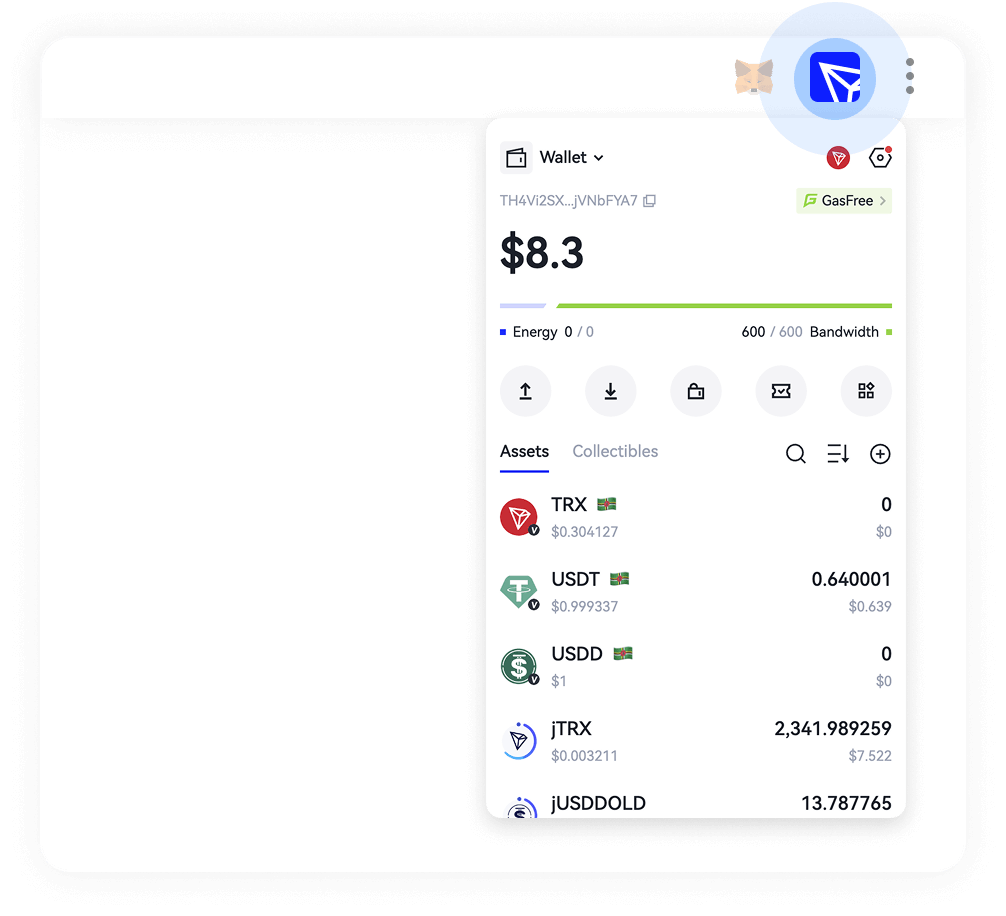
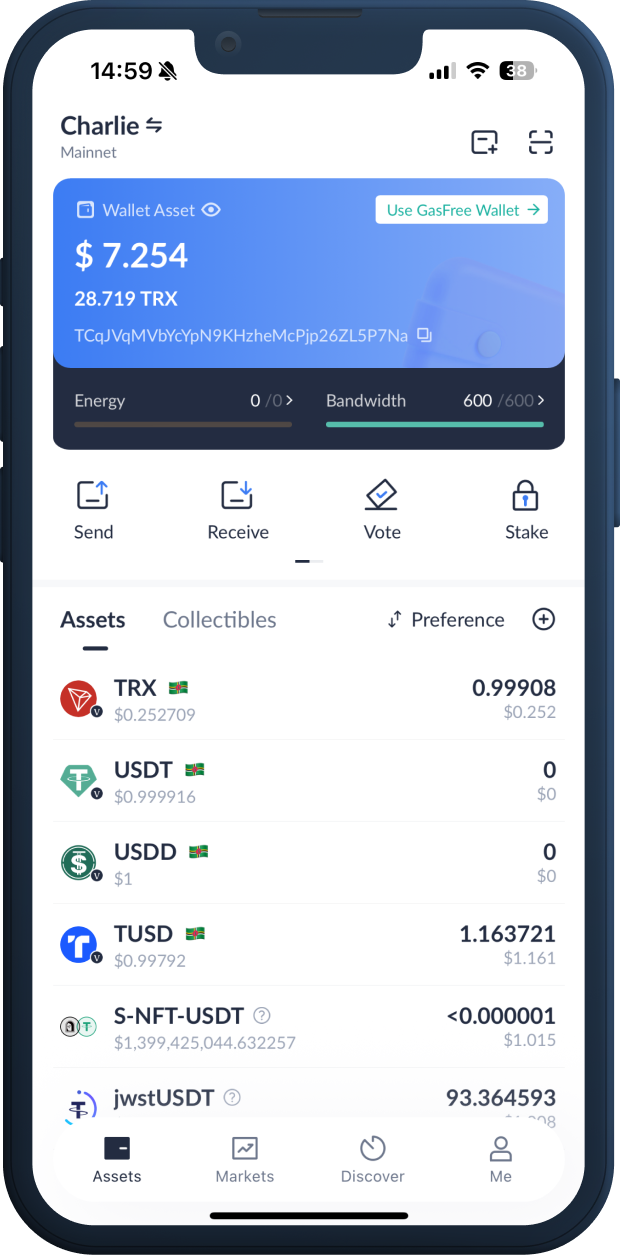
The official product is branded TronLink , and its appeal comes from how closely it follows TRON's resource model. On this chain, an account does more than hold a coin balance. It also tracks Bandwidth and Energy, the two resources that determine whether a transfer or smart contract interaction consumes frozen resources or burns TRX as a network fee. That makes wallet design matter: a clean resource page saves users from treating every transaction as a mystery charge.
TRON balances include more than TRX
A TRON account starts with an address, private key, and token balances, but the wallet also presents assets by token standard. TRX is the native coin used for transfers, staking, voting, and covering network costs. TRC-20 tokens power most fungible token activity, including stablecoin transfers. TRC-10 assets use TRON's older native token format, while TRC-721 covers NFT-style collectibles and unique assets.
Tronlink wallet also supports account creation, imports, HD wallet management, multiple accounts, and Ledger imports in supported environments. A user who manages several addresses sees them inside one app instead of switching between unrelated tools. The extension adds EVM network support for Ethereum, BSC, and BTTC, but the TRON workflow remains the distinctive reason people install it.
How staking TRX creates voting power and resources
Staking in TRON locks TRX to produce network rights. The user chooses how much TRX to stake and receives voting power used in Super Representative voting. Staking also relates to resources: accounts gain access to Bandwidth and Energy, which reduce the amount of TRX burned when sending transfers or triggering contracts.
This matters most for people who move TRC-20 tokens or interact with smart contracts. A plain TRX transfer leans on Bandwidth, while a contract call consumes Energy. When an account has enough available resources, the transaction uses those resources first. When it does not, the network charges TRX. Tronlink wallet makes the staking and resource screens accessible from the same place as signing, so the user sees the cause of a cost before approving a transaction.
Energy delegation turns unused resources into account utility
Energy delegation is the TRON feature that lets one account assign available Energy to another account. That is useful when a main account stakes TRX but a separate operating account performs contract transactions. It also helps teams that want one treasury-style account to supply resources while active wallets handle DApp use, payments, or automated workflows.
Inside Tronlink wallet, the concept is practical rather than abstract: the sender chooses a recipient, sets the delegated resource amount, and signs the operation. Delegated Energy stays linked to the original staking account, so the owner keeps the underlying TRX position while the recipient gets resource capacity for contract activity. The key caution is operational: delegate only to addresses you control or deliberately support, because the recipient gains spending relief for on-chain actions.

Transfers and DApp approvals follow TRON's signing model
Sending TRX or tokens uses a familiar wallet flow: choose an asset, enter a recipient, review the amount, check the network details, and sign. TRC-20 transfers add smart contract execution, so Energy availability becomes more important than it is for basic TRX movement. The confirmation screen deserves attention because it shows the address, token, and estimated network impact before the signature is created.
DApp connections work through the browser extension or the in-app browser on mobile. When a site requests access, the wallet exposes the selected address and later asks for signatures when transactions occur. This keeps control at the wallet layer. A DeFi swap, a voting action, an NFT transfer, and a contract approval all require a signed message or transaction from the user's local wallet.
Where the browser extension and mobile app differ
The extension suits desktop DApp sessions, developer testing, and long-form account management. It integrates with websites that support TronLink, and it is the usual choice for signing through a browser. Developers building TRON DApps often target this extension because it pairs with TronWeb and the common browser wallet pattern.
The mobile app fits routine transfers, QR-based receiving, portfolio checks, and on-the-go DApp access. It also makes account import and creation approachable for users who do not run a desktop wallet. Tronlink wallet works across both formats, so a user can keep the same recovery phrase model while choosing the interface that matches the task.
Security controls focus on local custody
Self-custody means the private key or mnemonic controls the assets, and the wallet keeps that sensitive material on the user's device with encrypted storage. The account owner signs transactions locally, then broadcasts them to the network. This design gives the user direct control over funds, staking choices, and DApp permissions.
Useful security habits stay concrete. Back up the recovery phrase offline, use a strong device passcode, separate high-value storage from daily DApp activity, and review contract prompts before signing. Ledger support adds a hardware approval layer for users who want physical confirmation before moving assets. Multisignature support serves shared accounts where several keys must approve important actions.
- Use one account for routine DApp activity and another for long-term storage.
- Check the recipient address before sending TRX or TRC-20 tokens.
- Keep enough TRX available for transactions that exceed resource balances.
- Review Energy and Bandwidth before repeated contract interactions.
- Disconnect DApps that no longer need access to the selected account.
Getting started with staking and resource use
A new user begins by installing the official extension or app, creating or importing an account, and recording the recovery phrase. After funding the address with TRX, the wallet can send basic transfers immediately. Staking starts from the resource or stake area, where the user selects TRX amount, resource direction, and voting-related choices.
Once staked, the account displays resource balances and voting power. That visibility is valuable before using a TRC-20 contract, because the user sees whether Energy is ready or whether the transaction will burn TRX. When the goal is to support a second address, the delegation action assigns resource capacity without moving the underlying TRX to that recipient.
When another wallet makes sense
That said, Tronlink wallet is the strongest default for TRON-first users because it understands TRON resources, token standards, staking, voting, and DApp calls in one interface. A hardware wallet setup suits larger balances that rarely move. A centralized exchange wallet is simpler for buying or selling, but it removes direct control over staking, resource delegation, and contract signing.
Multi-chain users also compare it with broad wallets that emphasize EVM networks. Those tools work well for Ethereum-style activity, yet they do not present TRON Energy, Bandwidth, and Super Representative voting with the same native focus. For people whose main activity is USDT on TRON, TRX staking, or TRON DApps, Tronlink wallet keeps the chain's unusual mechanics visible instead of burying them behind generic wallet screens.
Tronlink wallet - common questions
Does Tronlink wallet charge its own fee for TRX staking?
The wallet interface does not create a separate staking fee for locking TRX. Network costs still apply when transactions are signed and broadcast, and resource shortages lead to TRX being burned by the TRON network. The important cost variable is whether the account has enough Bandwidth or Energy for the action being taken.
Which recovery phrase length should I expect when creating the wallet?
Modern HD wallets use standard mnemonic phrase lengths such as 12, 15, 18, 21, or 24 words. The exact length shown during setup depends on the wallet flow. The phrase is the backup for the account, so it belongs offline and private. Anyone with the complete phrase can control the corresponding assets.
Why does a TRC-20 transfer cost TRX even after staking?
A TRC-20 transfer executes a smart contract, so it consumes Energy. If the account lacks enough usable Energy, the TRON network burns TRX to cover the remaining execution cost. Staking and delegation reduce that burn only when the resource balance is sufficient for the transaction being signed.
Is Ledger support useful for TRON staking actions?
Ledger support is useful when the account owner wants hardware confirmation before approving transfers, staking operations, or other signed actions. The wallet provides the interface, while the hardware device protects the signing key and confirms the transaction details. This setup is especially relevant for balances that are staked or held for longer periods.
Do I need a separate wallet for Ethereum, BSC, or BTTC assets?
The TronLink extension supports EVM networks including Ethereum, BSC, and BTTC, so one installation can manage more than TRON accounts. The experience is still most specialized for TRON because it exposes staking, Energy, Bandwidth, TRC standards, and voting. Heavy EVM users may still keep a dedicated EVM-focused wallet for other chains.