Tronlink is a self-custody TRON wallet for staking TRX, holding TRC assets, and signing DApp transactions
Self-custody TRON wallet for storing assets and signing transactions, with TRX staking resource delegation across app and extension.
Tronlink is a wallet built around the TRON network, giving users local control of private keys while they send TRX, manage TRC-10, TRC-20, and TRC-721 assets, vote in staking, obtain network resources, and connect to decentralized applications. It is available as a browser extension and mobile app, and its extension also reaches EVM networks such as Ethereum, BSC, and BTTC through a multichain wallet structure.
A TRON wallet shaped around resources, voting, and DApp signing
The distinctive part of this wallet is its fit with TRON's account model. TRX is more than a transferable coin on this chain: it also anchors staking, voting power, Bandwidth, and Energy. Those resources matter because TRON transactions consume network capacity in a different way from gas-only chains. A user who freezes or stakes TRX gains access to resources, then spends those resources on transfers or smart contract interactions.
That workflow makes the wallet feel less like a simple token holder and more like a control panel for an address. It displays assets, signs transactions, connects to DApps, and exposes the staking choices that decide how an account participates in the network. Tronlink also supports TRC-721 NFTs, so collectibles and other non-fungible assets sit beside fungible balances rather than requiring a separate interface.
What the extension adds on desktop
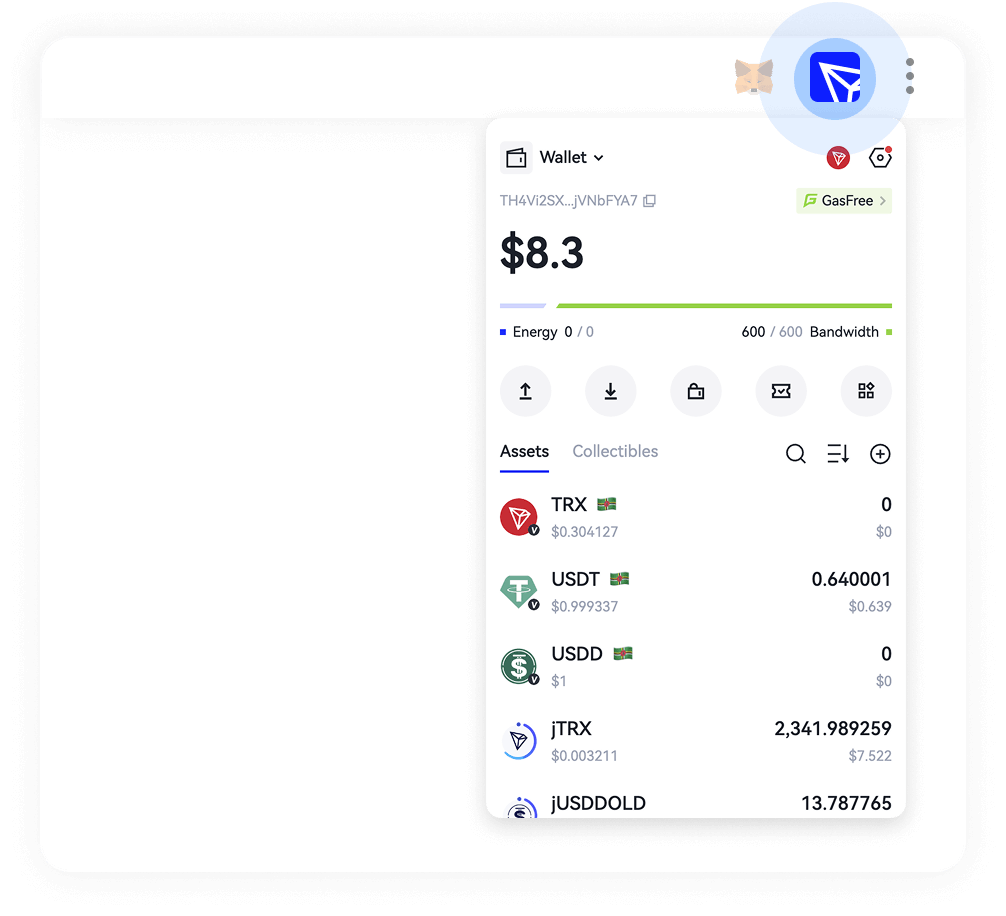
The browser extension is the route many users take when interacting with TRON DApps from a desktop browser. A site requests a wallet connection, the extension shows the account, and each transaction opens a signing prompt before anything moves on-chain. That prompt is the moment where the user reviews the destination, asset, and permission being requested.
Recent versions of the extension extend beyond a single network. It supports heterogeneous EVM networks including Ethereum, BSC, and BTTC, while the underlying HD wallet structure lets one mnemonic manage accounts across those networks. That matters for users who keep TRON assets and EVM assets in the same working setup, because network switching happens inside one wallet environment instead of across unrelated apps.
Mobile use for transfers, tokens, and Web3 browsing
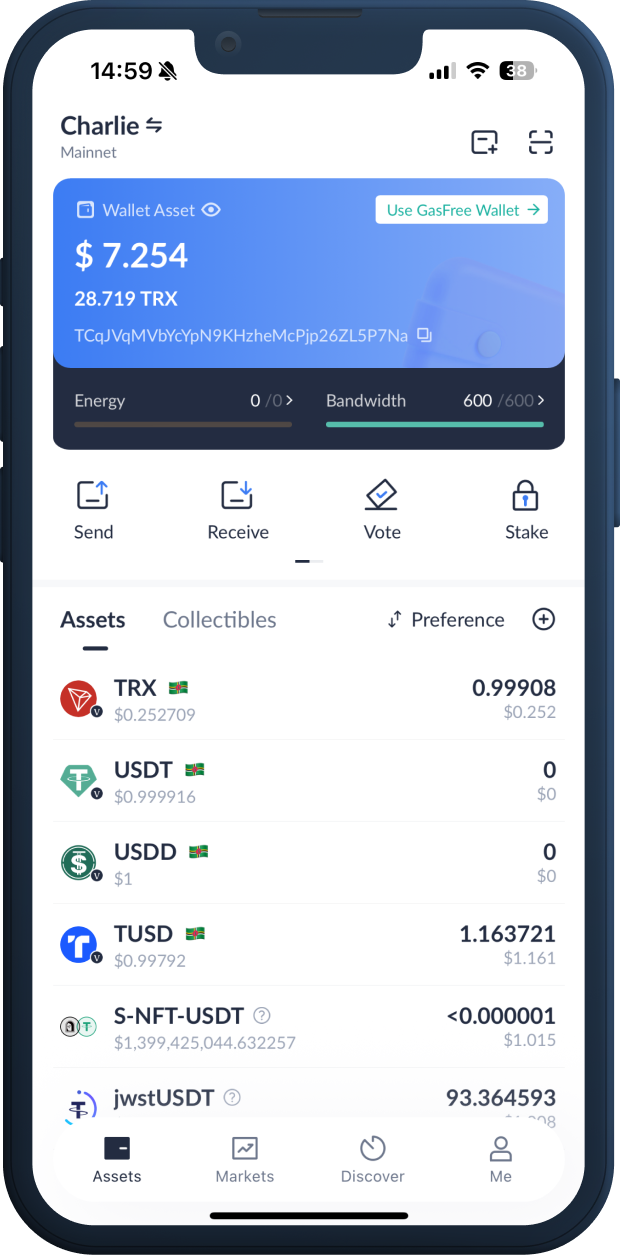
The mobile app handles the common daily jobs: creating or importing a wallet, receiving TRX, sending tokens, managing account names, and opening DApps from a phone. Tronlink is especially relevant for people moving USDT on TRON as a TRC-20 token, because wallet compatibility and network selection decide whether an address accepts the asset correctly.
Mobile convenience also raises the importance of reading token details. Wrapped or bridged assets may use familiar tickers while living on a different chain. ETH represented as a TRC-20 token is still a TRON token inside the wallet, and sending it to an Ethereum-only address creates avoidable trouble. The right network, token contract, and recipient address format matter before the signature is approved.

TRX staking, resource delegation, and votes
TRON staking links an account's TRX to resource acquisition and governance participation. Users stake TRX to receive resources, then vote for Super Representatives. The wallet presents this as an account action rather than a separate investment product. Bandwidth helps cover ordinary transfers, while Energy is tied to smart contract execution, so heavy DApp users pay closer attention to resource balances.
Delegation adds another layer. Resources obtained from staked TRX can be assigned to another account, which is useful when one address funds activity for a second address or when an operator separates storage from active use. Tronlink supports those native resource workflows, so the owner does not need to rely on a generic multichain wallet that only understands token balances.
Asset coverage across TRC-10, TRC-20, and TRC-721
TRON assets appear in several standards. TRC-10 tokens are native-token style assets issued on the network, TRC-20 tokens follow the smart contract token pattern used by many fungible assets, and TRC-721 covers NFTs. A wallet that understands all three gives a clearer account view and reduces the need to paste contract data into unrelated tools for routine checks.
Tronlink describes support for more than 100,000 tokens and serves users across more than 200 countries. Those figures do not change the core rule of asset handling: the wallet shows what exists at the address, while the chain records ownership. If a token does not appear immediately, the missing piece is often display configuration, a token contract selection, or the wrong network view.
Security model: local keys, encrypted storage, and signing review
This is a self-custody wallet, so private keys are stored locally rather than held in a custodial exchange account. The official materials describe dual encryption and local storage, along with environment checks intended to reduce exposure from risky runtime conditions. Users also get hot and cold wallet patterns, including options that separate everyday signing from longer-term storage.
Hardware wallet support is part of that security picture. Ledger importing via Bluetooth gives users a way to keep key material isolated while still using the app interface for account management. Multisignature support also fits teams, shared treasuries, and operational accounts where one person's signature should not be enough to move a set of assets.
The main day-to-day risk is careless signing. Scam DApps, fake mining pages, and copied token sites rely on users approving a request without reading it. A wallet can display the transaction, but the user authorizes the action; approvals and contract calls deserve the same attention as direct transfers.
How to begin without losing track of networks
A clean setup starts with one wallet creation or import, a securely stored recovery phrase, and a small test transfer. After that, the user adds the networks and token views needed for the actual assets being held. Tronlink makes this simpler by covering PC browser extension use and mobile use, but the same address discipline still applies.
- Create a new account or import an existing one with the recovery phrase or supported hardware wallet flow.
- Select the intended network before receiving or sending assets.
- Use a small TRX transfer first when working with a new address.
- Check whether the token is TRC-10, TRC-20, TRC-721, or an EVM-network asset.
- Review DApp permissions and revoke approvals that no longer serve a purpose.
This sequence keeps the first experience concrete. It also prevents a common mistake: treating a ticker as if it identifies the chain. A token symbol tells only part of the story; the network and contract define the asset being moved.
Where it fits beside Trust Wallet, MetaMask, and exchanges
MetaMask is the familiar default for EVM chains, while Trust Wallet covers many networks from a mobile-first angle. Centralized exchanges add fiat ramps and order books but keep account control inside the exchange until funds are withdrawn. Tronlink belongs in a different slot: it is the TRON-native wallet for users who need direct staking, voting, resource management, and DApp signatures.
That distinction matters most once TRON-specific features enter the workflow. A generic wallet may display TRX and TRC-20 balances, yet still offer a thinner view of resources, delegation, or network voting. The better choice is the one matching the job: exchange for trading liquidity, MetaMask for EVM-first activity, Trust Wallet for broad mobile holding, and this wallet for direct TRON participation.
The strongest use cases are operational, not decorative
People use this wallet because they need to do something on-chain: move TRX, receive TRC-20 USDT, claim or manage NFTs, sign into a DApp, stake for resources, or vote. Tronlink has been presented by its official site as trusted by more than 10,000,000 users worldwide, and that scale reflects how central wallet access is to the TRON ecosystem.
Its value is clearest when the account is active. Someone who only stores assets on an exchange will not touch many of its native tools. A user who interacts with TRON contracts, handles resource delegation, or switches between extension and mobile workflows gets a more complete interface for the chain's mechanics. The wallet turns an address into an operating surface for TRON and selected EVM networks.
Before you start with Tronlink
Does Tronlink charge wallet fees for sending TRX or TRC-20 tokens?
The wallet itself is the signing interface, while the TRON network accounts for transaction costs through Bandwidth and Energy. If an account has enough resources, routine transfers consume those resources. If resources are short, TRX is burned to cover the transaction. DApp interactions use more Energy than simple transfers because smart contracts require additional execution.
Can I use the same wallet on phone and browser extension?
Yes, the same self-custody account can be restored across supported app and extension environments by importing the recovery phrase or compatible wallet credentials. The important point is custody: whoever controls the recovery phrase controls the account. Users commonly keep the extension for desktop DApps and the mobile app for transfers, account checks, and QR-based workflows.
Which token standard should I choose for USDT in this wallet?
USDT on TRON is a TRC-20 token, so the receiving address and sending network must be TRON. USDT also exists on Ethereum, BSC, and other networks, but those are separate versions of the asset. Selecting the wrong network on an exchange or another wallet is the common source of missing-token confusion.
Is a Ledger hardware wallet supported for TRON accounts?
Ledger support is included through the wallet's hardware wallet import flow, with official materials mentioning Bluetooth support. This setup lets the app or extension act as the interface while the hardware device protects signing keys. It is most useful for users holding larger balances, managing long-term TRX positions, or separating storage accounts from everyday DApp activity.
Recovering access if the phone or computer is lost
Access is recovered with the wallet's recovery phrase or compatible private key backup, not through a password reset from a company account. A lost device does not remove assets from the blockchain, but a lost recovery phrase leaves the user without a practical way to control the address. Store the backup offline and separate from the device running the wallet.
Why does a token balance show on Tronscan but not in the wallet view?
The asset may need to be added manually by contract, the wallet may be showing a different network, or the token list may not include that contract by default. Tronscan reads blockchain data directly, so it can reveal assets at an address even when a wallet interface has not displayed them yet. Matching the contract and network usually resolves the display issue.
Can one mnemonic manage TRON, Ethereum, BSC, and BTTC accounts?
The official wallet materials describe a multichain HD wallet structure for TRON, Ethereum, BSC, and BTTC. That means one mnemonic can derive accounts across those supported networks inside the wallet environment. Each network still has its own assets, fees, and transaction rules, so switching networks changes the context for signing and sending.